
Introduction
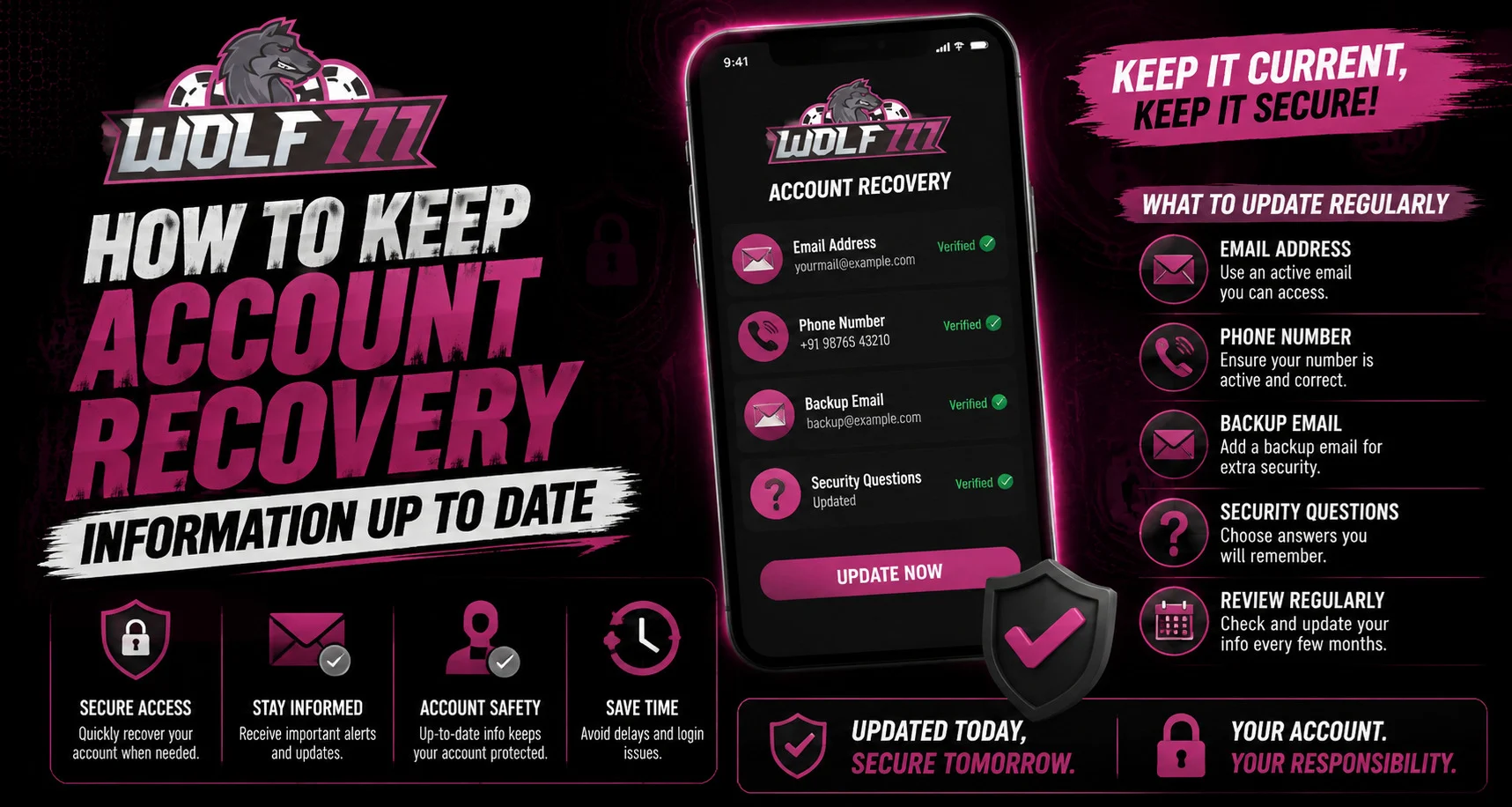
Account recovery information is an important part of maintaining access to any online account. Whether you use an email address, mobile number, recovery code, or authentication app, these details should remain current. For users of Wolf777, keeping recovery information updated can make it easier to regain access if a password is forgotten or a security issue occurs.
Over time, people may change their phone numbers, switch email accounts, replace smartphones, or stop using older authentication methods. If these changes are not reflected in account settings, recovery can become more complicated. A regular security review can help prevent avoidable access problems.
What Is Account Recovery Information?
Account recovery information refers to the details and security methods used to verify account ownership when normal login is unavailable.
Depending on the service, recovery options may include:
- Registered mobile number
- Recovery email address
- Backup email
- Recovery codes
- Authentication applications
- Trusted devices
- Additional verification methods
The available options vary by platform, so users should review the recovery features offered within their account security settings.
Why Should Recovery Details Stay Updated?
Outdated information can cause problems when users need to verify their identity.
For example, a verification code sent to an inactive phone number may not be accessible. Similarly, relying on an old email address can make password recovery more difficult.
Keeping recovery details current can help users:
- Restore account access more efficiently
- Receive important security notifications
- Complete identity verification
- Recognise unexpected account activity
- Reduce unnecessary recovery delays
Check Your Recovery Email Regularly
A recovery email should be an address that you actively use and can access.
When reviewing your account, check that:
- The email address is spelled correctly.
- The inbox is still active.
- You remember the email account password.
- The email account has appropriate security measures.
- You can receive verification messages.
If you have stopped using an older email account, replace it with an active address through the official account settings.
Keep Your Mobile Number Current
A mobile number is often used to receive verification codes and security alerts. If you change your number, update the account promptly.
Before saving a new number, confirm that:
- The number is entered correctly.
- You currently control the number.
- Verification messages can be received.
- Any outdated number has been removed when appropriate.
This is especially useful when preparing for future account recovery.
Review Recovery Codes and Authentication Methods
Recovery codes can provide an alternative way to verify account ownership if the primary authentication method is unavailable.
Store recovery codes securely and never share them with other people.
Users should also review their authentication setup after changing devices. If an authentication app is connected to an old smartphone, make sure the new device has been configured correctly before removing the previous method.
When managing a Wolf777 login, users should rely only on the platform’s official account and security procedures rather than responding to unexpected recovery messages.
Check Trusted Devices and Active Sessions
Some online services allow users to review devices or sessions associated with their accounts.
Look for:
- Old smartphones
- Computers you no longer use
- Unfamiliar browsers
- Unknown devices
- Unexpected active sessions
If you see activity you do not recognise, follow the service’s official security guidance. Changing your password may also be appropriate if there is a genuine security concern.
Update Information After Major Changes
Certain events should automatically remind you to review recovery settings.
Consider checking your information after:
- Changing your phone number
- Switching your primary email address
- Buying a new smartphone
- Losing access to an old device
- Changing your password
- Updating two-factor authentication
- Recovering your account
These simple checks can help keep your recovery options usable.
Avoid Common Recovery Mistakes
Users should also avoid practices that can weaken account security.
Never:
- Share passwords or recovery codes.
- Use an inactive email for recovery.
- Leave an old phone number connected unnecessarily.
- Store sensitive codes in public notes.
- Follow suspicious recovery links.
- Provide account details to unknown individuals.
When accessing Wolf777 com or another online service, users should verify that they are using the legitimate website or application before entering account information.
Conclusion
Keeping account recovery information updated is a straightforward but valuable security habit. Current contact details, recovery codes, authentication methods, and trusted devices can make account access easier to restore when normal login is unavailable.
A quick review every few months, along with updates after major changes to your devices or contact details, can reduce unnecessary recovery difficulties and support better account security.
FAQs
What is account recovery information?
Account recovery information includes details and security methods used to verify ownership and restore access when normal sign-in is unavailable.
How often should recovery information be checked?
A review every few months is a useful habit. It should also be checked whenever your phone number, email address, or primary device changes.
Should an old phone number be removed?
If you no longer control the number, it is generally advisable to replace or remove it through the service’s official security settings.
How should recovery codes be stored?
Recovery codes should be stored securely, such as in a reputable password manager or protected offline location. They should never be publicly shared.
What should I do if I lose access to my recovery email?
Use another available recovery method and follow the service’s official account-recovery process. Avoid sharing passwords or verification codes with anyone offering unofficial assistance.


