
Introduction
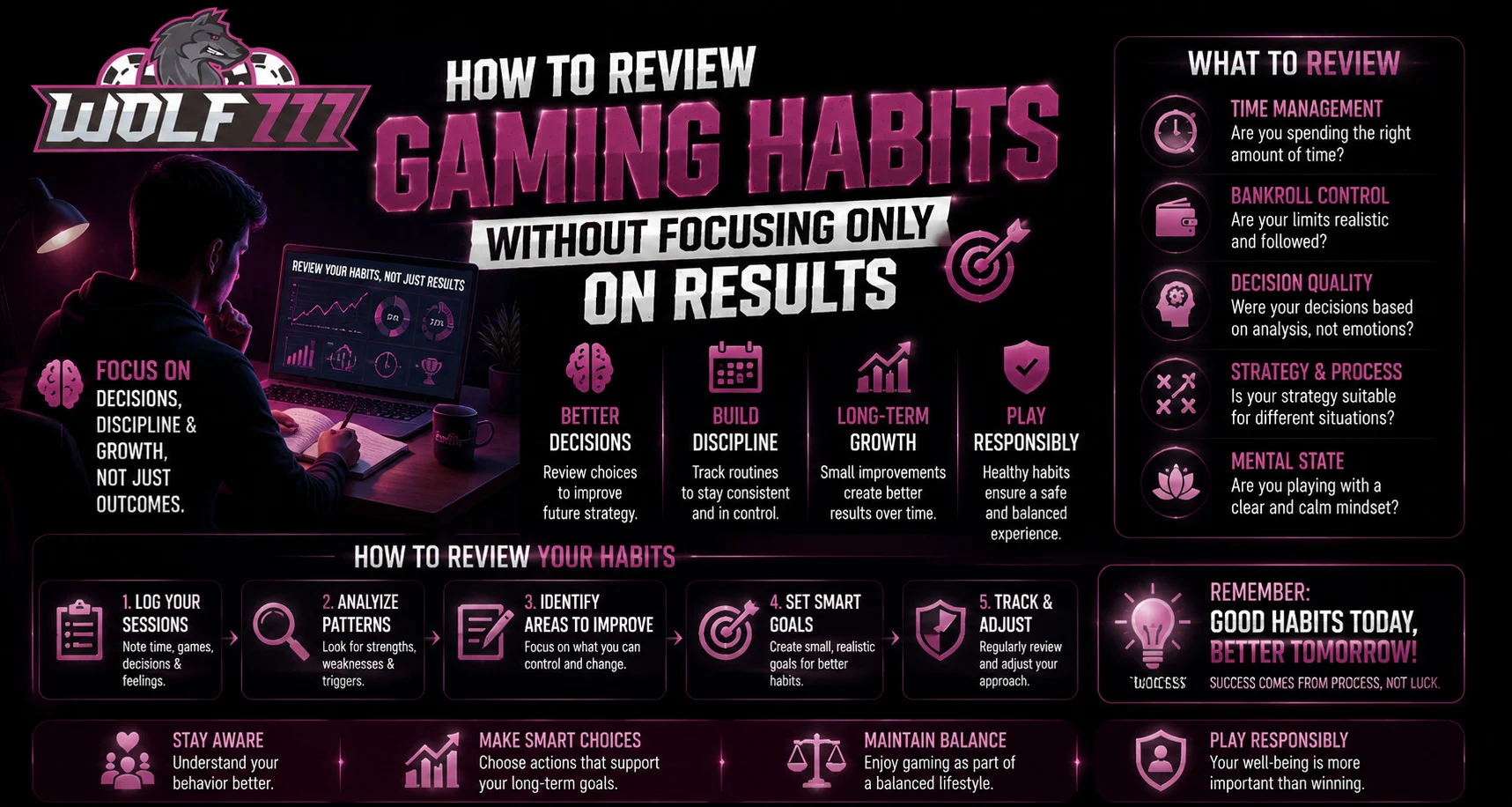
Gaming habits are often judged by one simple question: did you win or lose? However, focusing only on results can hide important patterns in how, when and why someone plays. A more balanced review looks at the overall experience, including time spent, spending behaviour, emotions and decision-making.
For users of Wolf777, reviewing these habits regularly can help create greater awareness around personal gaming routines. The goal is not to judge individual results but to understand whether gaming remains controlled, comfortable and consistent with personal limits.
Why Results Do Not Tell the Whole Story
A short-term result does not necessarily show whether a gaming habit is healthy or sustainable. Someone may have a positive session while spending more time or money than originally planned.
Similarly, a losing session does not automatically mean that every decision was poor.
A broader review should consider:
- How long the session lasted
- Whether spending stayed within a set limit
- How frequently gaming took place
- Whether decisions were made calmly
- Whether gaming interfered with normal responsibilities
Looking at these factors provides more useful information than simply counting wins and losses.
Track Time Spent Gaming
Time is one of the easiest habits to overlook during an engaging gaming session.
Keep a simple record of:
- Session start and finish times
- Number of sessions per week
- Unplanned extra sessions
- Breaks taken during longer sessions
Comparing planned gaming time with actual time can reveal whether sessions are gradually becoming longer.
If gaming regularly continues beyond the intended stopping point, it may be worth reconsidering the personal limits being used.
Review Spending Separately From Results
Financial habits should be reviewed independently from gaming outcomes.
Instead of asking only how much was won or lost, consider whether spending followed a predetermined budget.
Useful questions include:
- Did I stay within my planned limit?
- Did I increase spending after an unsuccessful session?
- Did I use money intended for essential expenses?
- Did I make decisions because of emotions?
- Was any spending unplanned?
Keeping gaming funds separate from essential household expenses can also make personal budgeting easier.
Pay Attention to Emotions
Emotions can influence decisions more than users realise.
After a session, consider how you felt before, during and after gaming.
Common warning signs may include:
- Frustration after losses
- Excitement leading to longer sessions
- Feeling pressure to recover losses
- Difficulty stopping
- Irritation when interrupted
The purpose of identifying these feelings is not to criticise yourself. Instead, recognising patterns can make it easier to take a break and reassess your routine.
Look at Decision-Making Habits
A useful review should also consider how decisions were made.
Ask yourself whether you:
- Followed your predetermined limits
- Changed decisions because of emotions
- Continued after reaching your stopping point
- Took regular breaks
- Checked your available budget before playing
This approach shifts attention from the final result to the process behind each session.
Create a Simple Weekly Review
A short weekly review can make habit tracking easier.
Create a basic checklist covering:
- Total gaming time
- Number of sessions
- Planned versus actual spending
- Breaks taken
- Emotional patterns
- Reasons for starting a session
- Whether personal limits were followed
There is no need to create complicated spreadsheets. A simple note can be enough to identify repeated patterns.
Set Clear Personal Limits
Personal limits are more useful when they are decided before a session begins.
Consider setting separate limits for:
- Time
- Spending
- Session frequency
- Break periods
Once a limit has been reached, treat it as a stopping point rather than something that needs to be extended because of the current result.
When accessing Wolf777 com, users should also review the platform’s available responsible-gaming information and account controls where applicable.
Focus on Overall Well-Being
Gaming should fit comfortably alongside everyday responsibilities. A broader habit review can therefore include areas outside gaming.
Consider whether gaming affects:
- Sleep
- Work or studies
- Family time
- Social activities
- Exercise
- Personal finances
If gaming begins interfering with important parts of daily life, taking a break and seeking appropriate support can be a sensible step.
Conclusion
Reviewing gaming habits should involve more than counting wins and losses. Time, spending, emotions, decision-making and the effect of gaming on everyday responsibilities can provide a much clearer picture of personal behaviour.
For users following their routines with Wolf777, regular self-review can encourage greater awareness and help keep gaming within personally chosen boundaries. The focus should always remain on control, balance and responsible participation rather than chasing a particular result.
FAQs
Why should gaming habits be reviewed beyond results?
Results only show what happened during a session. Reviewing time, spending, emotions and decision-making can reveal broader patterns.
How often should gaming habits be reviewed?
A weekly review can be a practical starting point. More frequent checks may be useful if you are trying to establish new limits.
What should I track during a gaming review?
Track session duration, frequency, spending, breaks, emotional responses and whether you followed your predetermined limits.
Why is tracking spending important?
Tracking spending helps you determine whether gaming remains within a planned budget instead of allowing short-term results to influence financial decisions.
What should I do if gaming starts affecting daily life?
Consider taking a break, strengthening your personal limits and speaking with someone you trust or an appropriate professional support service if needed.


