
Introduction
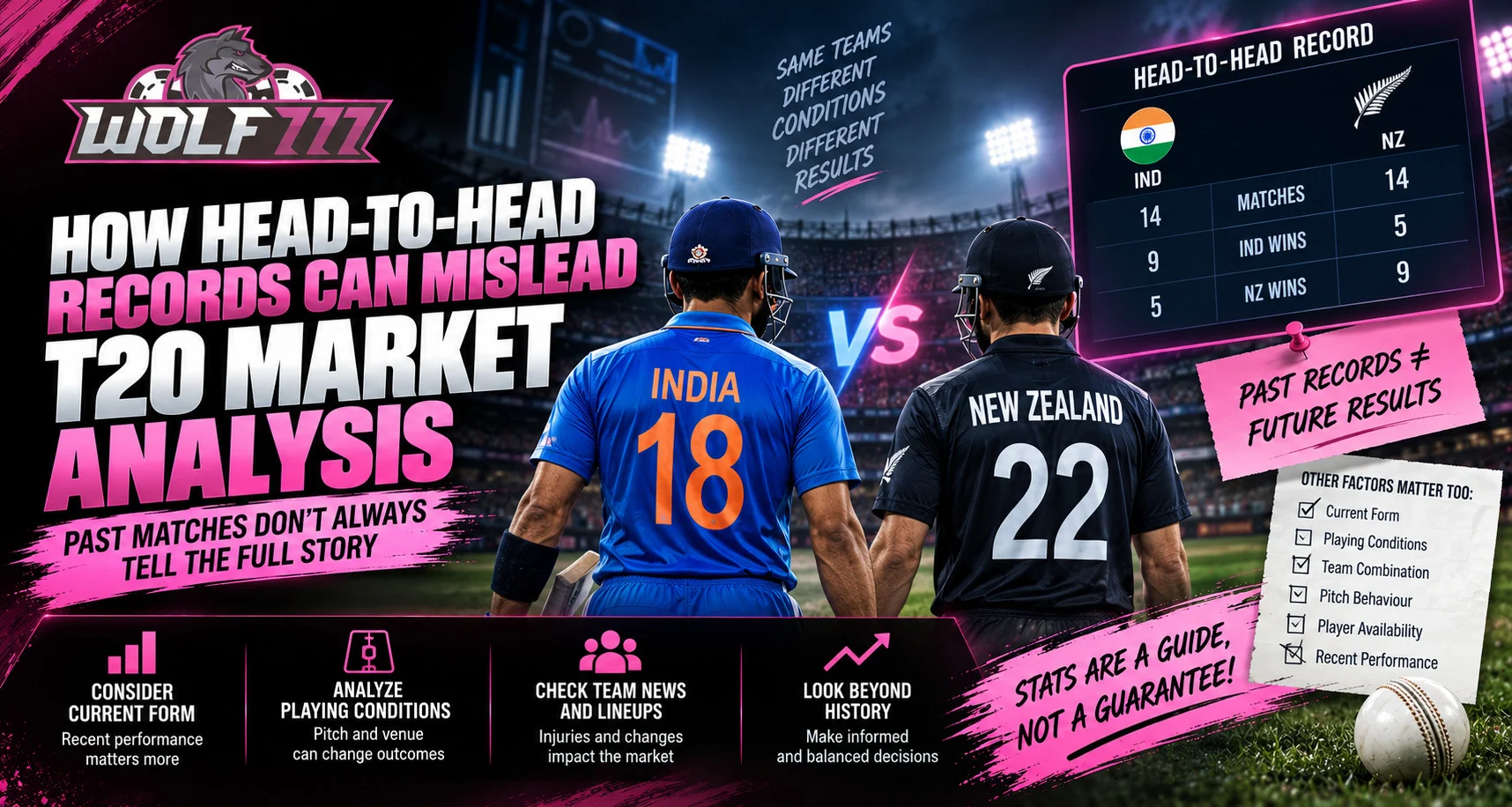
Head-to-head records are often used when analysing T20 cricket, but historical results do not always provide an accurate picture of a current match. For Wolf777 users following T20 markets, understanding the limitations of past meetings can help create a more balanced view of the teams involved.
T20 cricket changes quickly because squads, playing conditions, tactics and player roles can be different from one season to another. As a result, historical head-to-head numbers should be treated as background information rather than a standalone measure.
What Are Head-to-Head Records?
Head-to-head records show how two teams have performed against each other in previous matches.
They may include:
- Total matches played
- Wins for each team
- Recent results
- Average scores
- Highest and lowest totals
- Results at specific venues
These statistics can provide useful historical context, but they do not automatically predict what will happen in the next game.
Teams Change Over Time
One of the biggest weaknesses of head-to-head analysis is that teams rarely remain the same.
Players may:
- Retire or become unavailable
- Move between teams
- Experience changes in form
- Take on different roles
- Miss matches because of fitness concerns
A result from several years ago may therefore involve completely different players and strategies.
T20 Tactics Keep Evolving
T20 cricket is particularly sensitive to tactical changes. Teams continually experiment with batting orders, bowling combinations and field placements.
A team that previously struggled against a particular opponent may have developed a different approach.
Important tactical factors include:
- Powerplay batting strategies
- Use of spin during the middle overs
- Death-over bowling combinations
- Impact-player selections
- Aggressive batting approaches
Historical results may not capture these changes.
Venue Conditions Can Change the Picture
Where a T20 match is played can have a major influence on performance.
A team’s overall head-to-head record may look poor, but its record at the current venue could tell a different story.
Users should consider:
- Pitch characteristics
- Ground dimensions
- Average first-innings scores
- Dew conditions
- Spin or pace assistance
- Recent matches at the venue
Local conditions can sometimes be more relevant than an overall historical record.
Recent Form Matters
Current form can provide a more useful perspective than older head-to-head results.
When reviewing recent performances, consider:
- Results from the last few matches
- Batting consistency
- Bowling economy
- Powerplay performance
- Death-over execution
- Recent player contributions
A team with strong recent performances may be in a very different position from when previous head-to-head matches were played.
Player Matchups Can Add More Context
Individual matchups can also influence T20 games. A particular batter may have performed well against a certain bowler, while another player may have struggled against a specific type of delivery.
Useful areas to examine include:
- Batter versus bowler records
- Left-hand and right-hand combinations
- Spin versus pace performance
- Powerplay scoring
- Death-over statistics
These details can provide more specific information than a simple team-versus-team record.
Small Samples Can Be Misleading
Another issue is sample size. If two teams have played only a few T20 matches against each other, one or two unusual results can heavily influence the overall record.
For example, a narrow win in a rain-affected match or a game decided by an exceptional individual performance may not represent a consistent trend.
A larger sample generally provides more useful historical context, but even large samples need to be considered alongside current circumstances.
How to Use Head-to-Head Data Properly
Head-to-head statistics can still be valuable when combined with other information.
A balanced analysis can include:
- Recent team form
- Current squad availability
- Venue conditions
- Player matchups
- Toss and playing conditions
- Historical head-to-head results
This approach prevents one statistic from dominating the entire analysis.
Avoid Making Decisions From One Statistic
For users exploring T20 markets through Wolf77 com, historical records can be one part of research rather than the entire basis for a decision.
It is useful to ask whether the teams, players, venue and tactical approaches are comparable to those from previous meetings. If several important factors have changed, an old head-to-head record may have limited relevance.
Conclusion
Head-to-head records can provide valuable historical background, but they should not be treated as a complete measure of current T20 strength. Changes in players, tactics, venues, form and match conditions can make older results less relevant.
A more balanced approach combines historical records with current information and match-specific factors. This can help cricket followers understand T20 markets more carefully while avoiding conclusions based on a single statistic.
FAQs
Why can T20 head-to-head records be misleading?
They may include matches played with different squads, coaches, venues, tactics and playing conditions, making some historical results less relevant to the current matchup.
Should head-to-head records be ignored completely?
No. They can provide useful historical context when combined with recent form, player availability, venue statistics and other relevant information.
Why does venue matter in T20 cricket?
Pitch behavior, ground dimensions, dew and local conditions can influence batting and bowling performances, making venue-specific records useful.
Is recent form more important than historical results?
Recent form can provide a better indication of current team performance, but it should still be considered alongside other match-specific factors.
How can T20 market analysis become more balanced?
Review several factors together, including recent form, squad changes, player matchups, venue conditions, tactical approaches and historical records.


